
Studio

Tampoori Studios
Hand-Dyed Batik & Tie-Dye Fabric in Accra
Batik, Tie-Dye & In-House Dye Techniques
If you are searching for where to buy batik in Accra, you are likely looking for more than just printed fabric.
Accra has a vibrant textile culture: from market stalls to craft centres to independent studios. But not all hand-dyed fabric is created the same way, and not all “batik-style” patterns are true wax-resist work. Tampoori Studios specialises in hand-dyed textiles — including batik, tie-dye, and proprietary in-house dye techniques developed exclusively in our Ghana studio. This guide will help you understand your options in Accra and what makes Tampoori different.

What We Mean by Hand-Dyed Textiles
At Tampoori, hand-dyed includes:
- Batik (wax-resist dyeing)
- Tie-dye (structured folding, binding and immersion techniques)
- Tampoori-developed in-house dye innovations
We do not digitally print batik-style patterns. We do not mass-produce marbled dye. We do not replicate popular market prints. Every piece is dyed, fixed, washed and inspected locally in Ghana.

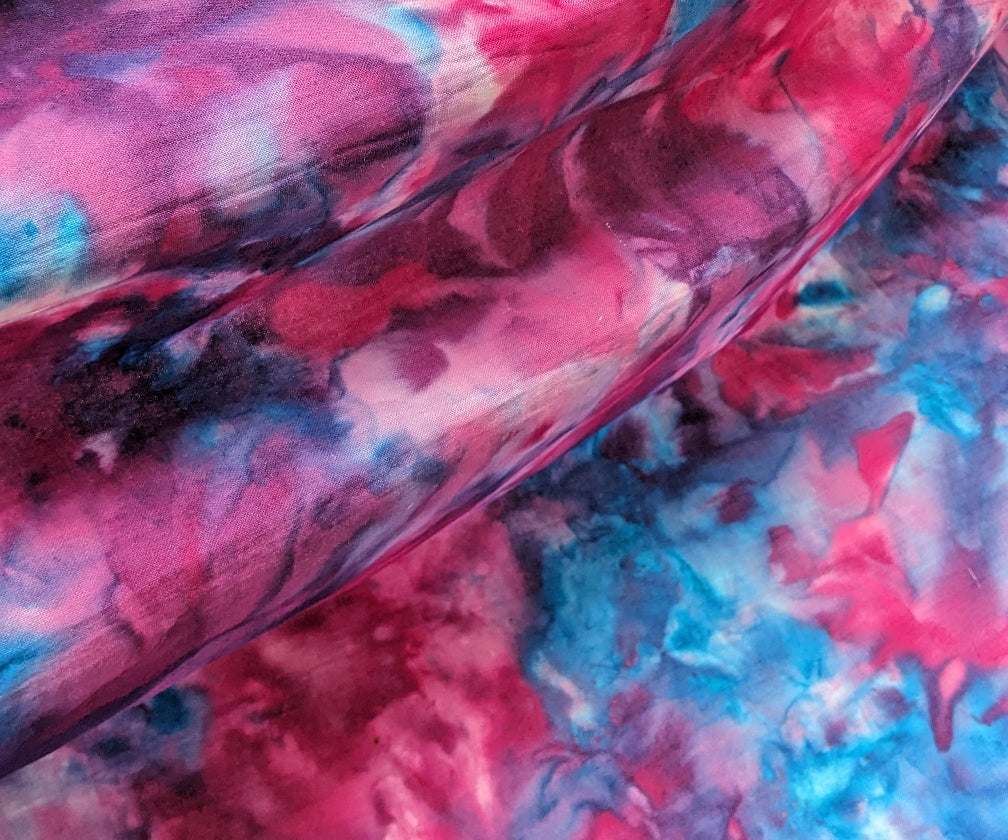
Batik, Tie-Dye & Inhouse Techniques
Batik is a wax-resist dyeing technique where wax is applied to fabric before immersion in dye. The wax prevents colour penetration in specific areas, creating layered designs once removed. At Tampoori, batik is developed in small batches on natural fibres including cotton, linen, silk and rayon.
Tie-dye is often misunderstood as random colour play. At Tampoori, tie-dye is structured. We use controlled folding, binding and resist techniques to create deliberate patterning. Our tie-dye collections are released in limited runs, with thoughtful palettes and wearable proportions.
In-House Dye Techniques. Beyond batik and tie-dye, Tampoori develops proprietary dye techniques that are unique to our studio. These include:
- Layered resist methods
- Controlled negative space dyeing
- Structured pattern mapping
- Multi-stage colour immersion
These methods cannot be found in markets or replicated by mass production. They are part of what makes Tampoori fabrics recognisable.
How to Tell Good Batik & Tie-Dye
If you are shopping in Accra, here are practical checks:
Quality hand-dyed fabric is usually made from cotton, linen, silk or rayon. Synthetic blends often feel slippery and do not absorb dye evenly.
Good dye penetrates the fibre. The colour should appear absorbed, not flat or sitting on top like a print.
The reverse side should show colour penetration. Dramatically lighter backs can indicate surface printing.
Quality batik shows intentional wax lines.
Quality tie-dye shows structured folding and controlled transitions. Random flooding and muddy overlaps often signal rushed production.
Excessive bleeding suggests poor fixing.
Properly dyed fabric should retain clarity after washing.
Visit Tampoori in Accra
Visit our physical fabric studios in Accra to touch, drape, and choose authentic hand-dyed batik and tie-dye fabrics in person. Whether you are looking for a fabric store in Spintex or a premier textile studio in Labone, our spaces stock small-batch cotton, linen, silk, and rayon by the yard for fashion designers, tailors, and fabric lovers. Touch, feel, and select our authentic hand-dyed batik and tie-dye fabrics in person.
Spintex Road
Address: Elim House, Spintex Road, Accra, Ghana
Landmarks & Directions: The studio is right beside Danpong Hospital. Accessible from Kotoka International Airport and East Legon via the motorway detour.
Phone / WhatsApp: +233 53 520 7072
Opening Hours: Monday – Saturday: 09:00 – 18:00
Studio Highlights: Full-range yardage selection, parking available, in-person custom dye consultations, and bulk studio sourcing for tailors and fashion designers.
Labone
Address: 5 Labone Crescent, Labone, Accra, Ghana
Landmarks & Directions: Situated in central Labone, take the road between Ecobank and CalBank in Labone, then continue straight along the crescent. We are on your right.
Phone / WhatsApp: +233 24 709 9474
Opening Hours: Monday – Saturday: 10:00 – 19:00
Studio Highlights: Extended evening hours for after-work fabric shopping, exclusive small-batch drops, curated swatches for designers, and street parking.