
How to Care for Hand-Dyed Fabric: The Complete Tampoori Guide
You found the perfect fabric. The colour stopped you mid-scroll: that deep indigo, that warm ochre, that particular shade of bubblegum pink that somehow felt made for you. You ordered it, it arrived, and now it's sitting in your hands and you're thinking: how do I not ruin this?
We hear this question more than almost any other at Tampoori. And we understand it completely. Hand-dyed fabric is not the same as something that rolled off a factory machine in identical copies. It was made by a person, in a specific batch, on a specific day, with dye that responded to the water and the heat and the hands that held it. That uniqueness is exactly what you paid for, and it's also exactly what deserves a little extra care.
This is the guide we wish every customer received the moment they took home their first piece of Tampoori fabric. Read it once, keep it somewhere handy, and your fabric will reward you for years.
First, understand what you're working with
Most of our hand-dyed fabric, whether batik, tie-dye, Adire, or any other artisan technique, is dyed using dyes that bond directly to the fabric at a molecular level. This is actually a good thing: it means the colour is in the fabric, not just sitting on top of it. Done well, it's remarkably colourfast.
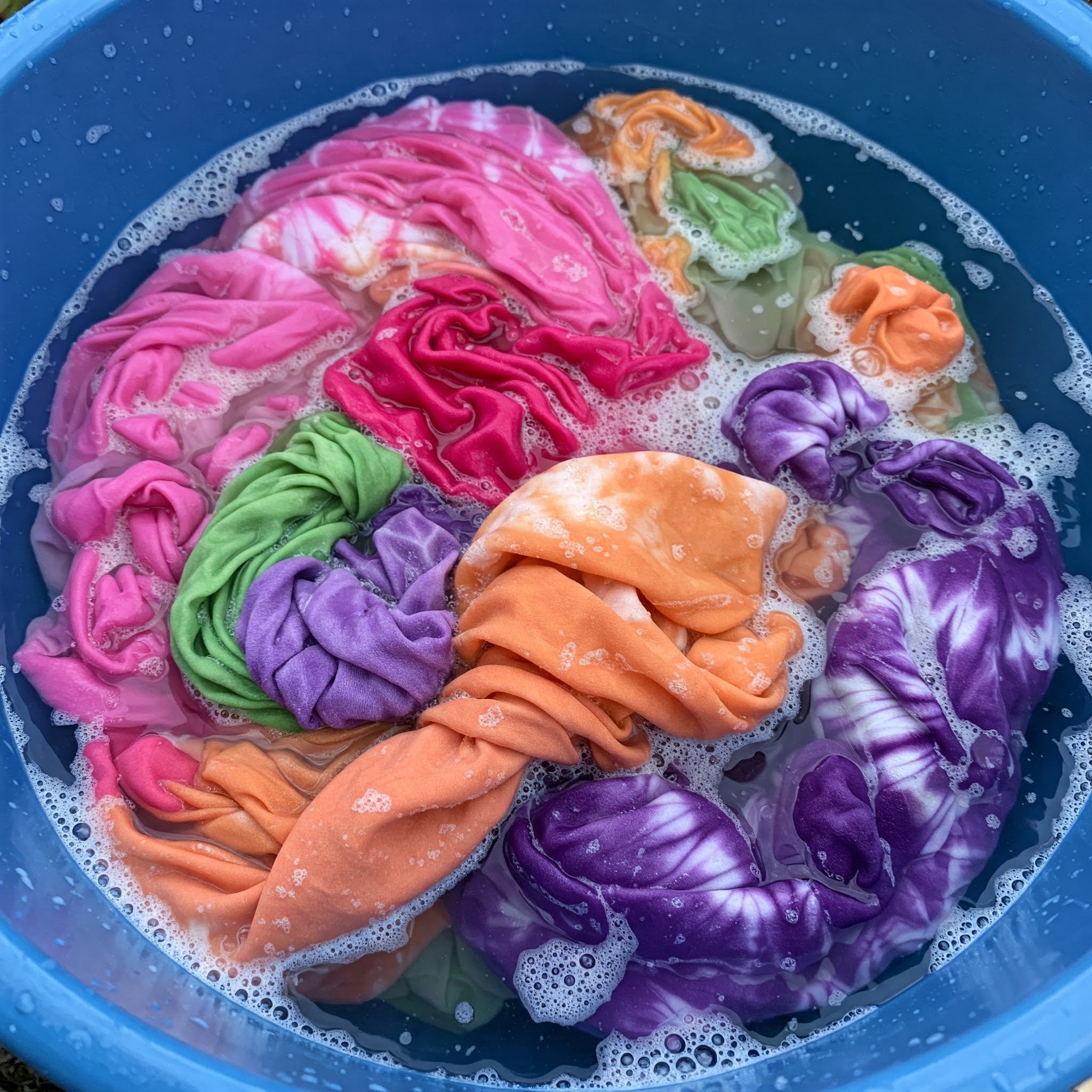
But here's what's also true: the first few washes will always release a little excess dye. This is completely normal. It is not the fabric "losing colour." Think of it like a new pair of dark jeans: the first wash looks alarming, and then everything settles. With hand-dyed fabric, that initial release is simply the unfixed dye finding its way out. After two or three washes, the colour stabilises and you'll have very little transfer going forward.
Knowing this changes everything. You stop panicking at the first sign of colour in the water, and you start washing with intention.
Washing: The Golden Rules
Always cold wash. Heat is the enemy of hand-dyed fabric. Hot water opens the fibres, encourages dye molecules to release, and over time will fade your fabric significantly faster than cold water ever would. Cold water, whether by hand or machine, keeps the fibres tight and the colour where it belongs.
Wash alone for the first two washes. This is non-negotiable. Even colourfast fabric will release some dye in its first wash, and you do not want that dye ending up on your white linen or your light-coloured pieces. Give your new fabric a private first wash, or at minimum, wash it with similar colours only.
Turn garments inside out. If your hand-dyed fabric has been made into a garment, always turn it inside out before washing. The outside face of the fabric that everyone sees is protected from friction and water pressure this way. It's a small habit that makes a big difference over time.
Hand washing is always the safest option. A gentle hand wash in cool water with a small amount of mild liquid detergent (one designed for delicates, not biological powder) is the gold standard for hand-dyed fabric. You have full control over the water temperature, the pressure, and the duration.
If you use a machine, use the gentlest cycle available. A delicate or hand-wash cycle at 30°C or below is acceptable once your fabric has had its first couple of hand washes. Avoid anything that involves heavy agitation as this loosens dye and weakens fibres faster than anything else.
Never use biological detergents or bleach. The enzymes in biological washing powder are designed to break down organic material and some dyes are organic material. They will fade your fabric over time, and they will do it gradually enough that you might not notice until significant damage is done. Use a gentle, pH-neutral, liquid detergent. When in doubt, use less detergent than you think you need. More soap does not mean cleaner fabric.
Do not soak for extended periods. A quick wash is all your fabric needs. Leaving hand-dyed fabric submerged in water for a long time encourages dye to migrate and can cause uneven fading. Wash, rinse, done.
Rinsing
Rinse thoroughly in cold water until the water runs completely clear. If you see colour in the rinse water after the third or fourth wash, don't panic, just keep rinsing. Incomplete rinsing leaves detergent residue in the fabric, which attracts dirt and dulls colour over time.
Never wring hand-dyed fabric. Twisting places enormous stress on the fibres and can distort the weave permanently. Instead, gently press the water out by folding the fabric and applying soft pressure, or roll it in a clean dry towel and press down.
Drying
Air drying is always best. Lay flat or hang on a line in a shaded spot. This is important as direct sunlight will fade hand-dyed fabric. UV light breaks down dye molecules, and the Ghanaian sun in particular is strong enough to cause visible fading in a single afternoon. Dry in the shade, always.
Avoid tumble drying if you can help it. The heat and tumbling action are both hard on dyed fabric. If you must use a dryer, use the lowest heat setting and remove the fabric while it is still slightly damp.
Don't hang heavy wet fabric from a single point as the weight of the water will stretch the weave. Lay it flat to dry or drape it over a wide rail or hanger.
Ironing
Hand-dyed fabric can be ironed, and for batik in particular, a light press makes a beautiful difference to how it looks and drapes.
Always iron on the reverse side that is, the back of the fabric, not the face. This protects the surface from direct heat contact, which can cause scorch marks and dull the colour.
Use a medium heat setting, not high. Cotton can handle more heat than rayon or linen, so adjust accordingly. When in doubt, start lower and test on a small inconspicuous corner.
Use a pressing cloth if you're ironing the face side directly. A clean, damp cotton cloth placed between the iron and your fabric will diffuse the heat and protect the colour.
Never iron fabric that is still damp. This is not because it will damage the colour, but because it can cause the dye to transfer onto your ironing board or pressing cloth.
Storing Your Fabric
How you store hand-dyed fabric matters more than most people realise.
Fold, don't hang uncut fabric lengths for long-term storage. Hanging puts sustained stress on the fibres along the fold lines and can cause permanent distortion over time.
Keep away from direct sunlight. A drawer, a fabric box, or a cupboard away from windows is ideal. Even indirect light exposure over months will gradually affect colour.
Store away from perfume and alcohol. This is something we say on every Tampoori product page, and we mean it. The alcohol in perfume and body spray is a solvent — it can lift dye from fabric on contact and leave pale, permanent marks. Spray your perfume and let it dry completely before dressing, and keep your stored fabric away from your dressing table.
Use acid-free tissue paper if you're storing pieces long-term or gifting them. This protects delicate fabric from contact with other surfaces and from humidity.
A Note on Colour Variation
If you've bought hand-dyed fabric from us before, you may have noticed that two pieces described as the same colourway are never quite identical. This is intentional, and it is not a defect.
Every batch of fabric is dyed by hand, and no two batches behave exactly the same way. The temperature of the water on a given day, the humidity in the studio, the particular cotton weave of that batch, even the time of day, all affect the final colour. This variation is the signature of the maker. It is what makes your piece genuinely one-of-a-kind.
Over time, as you wash and wear your Tampoori fabric, the colour will evolve gently. This is the natural ageing of hand-dyed cloth, and we think it is beautiful. A piece that has been loved and worn and washed develops a softness and depth that brand-new fabric simply cannot replicate. That is what we mean when we say Tampoori fabric is a future heirloom.
Quick Reference Cheat Sheet
| Question | Answer |
|---|---|
| Water temperature | Cold always |
| First wash | Alone or with similar colours |
| Detergent | Mild, pH-neutral, liquid |
| Machine wash? | Delicate cycle, 30°C max |
| Hand wash? | Yes, always the safest |
| Tumble dry? | Avoid; air dry in shade |
| Direct sunlight? | Never, will fade colour |
| Iron? | Yes, reverse side, medium heat |
| Wring? | Never, press gently instead |
| Perfume contact? | Avoid, can lift dye permanently |
Still have questions?
We are always happy to help. If you're unsure about a specific fabric type: cotton, rayon, linen, chiffon, or you have a piece that needs special attention, send us a message on WhatsApp or pop into either of our studios on Spintex Road or Labone Crescent. Our team knows these fabrics inside out, because they watch them being made.
Take good care of your fabric, and it will take good care of you.
- The Tampoori Team


Leave a comment
This site is protected by hCaptcha and the hCaptcha Privacy Policy and Terms of Service apply.