
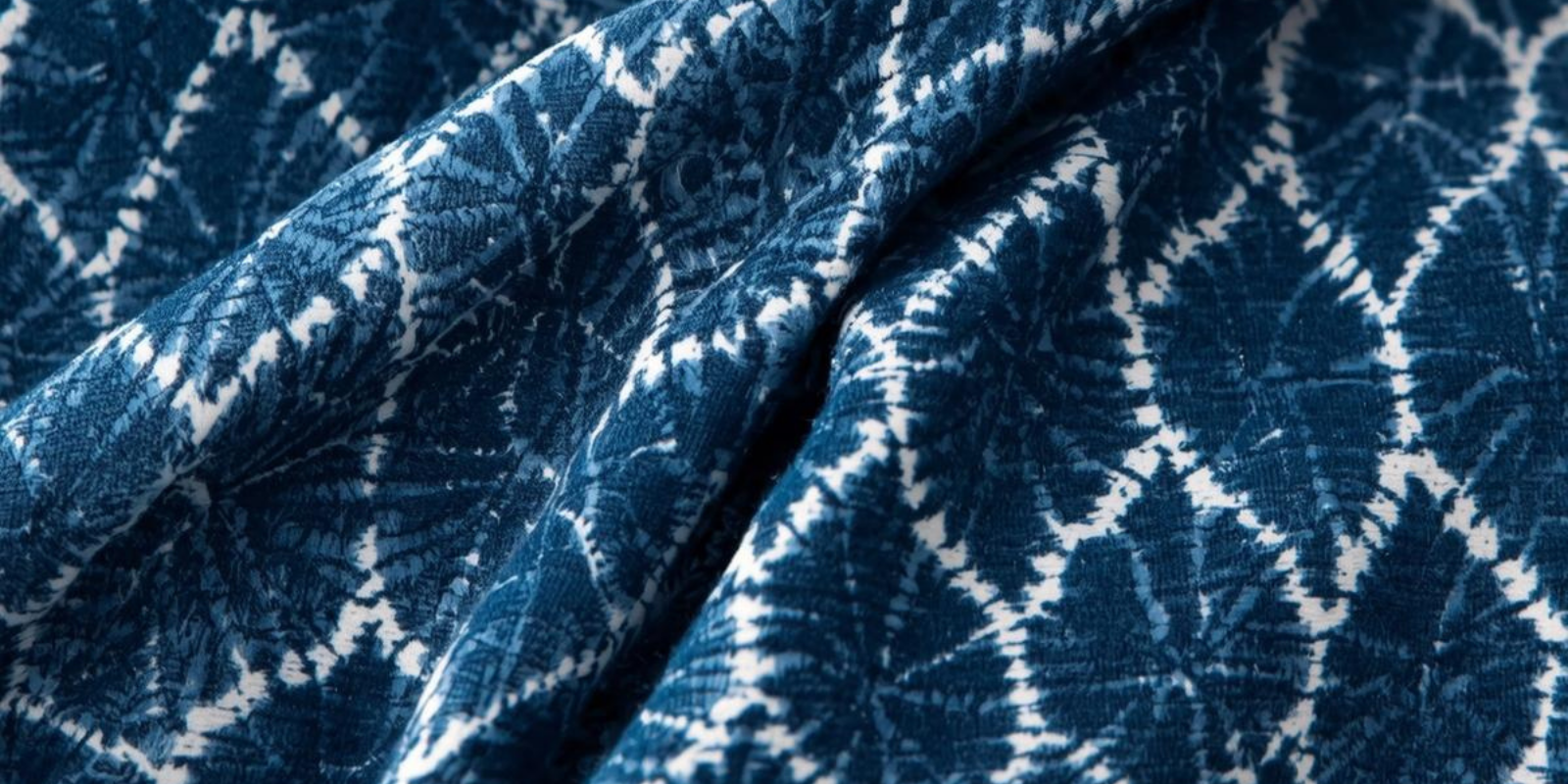
The Blue That Built Empires: A Short History of Indigo
Before blue jeans. Before denim. Before any of the things we associate with the colour blue today, there was indigo. And much of the world's most extraordinary indigo came from West Africa.
If you own a piece of Tampoori indigo fabric, you're holding something with a very long story behind it. Here's the short version.
The dye that was worth more than gold
Indigo is one of the oldest dyes in human history. In Europe, it was so valuable that traders literally called it blue gold; and they would do extraordinary things to control its supply. In the American South, it was often referred to as a "cash crop" second only to rice or tobacco. Wars were fought over it. Trade routes were built around it. Colonial powers forced enslaved labour to grow it in Haiti, Jamaica, and the American South, all to feed Europe's hunger for this particular shade of blue.
What those same Europeans were slower to acknowledge was that the art of African indigo production had been passed down from one generation to the next for at least 700 years, making it one of the oldest industries in existence.
African indigo, native to areas of Mali, Guinea, Ivory Coast, Senegal, and Nigeria in particular, had been particularly coveted in world markets for millennia. It had been one of the so-called hidden commodities that powered the trans-Saharan and trans-Atlantic trade routes.
And for most of that history, African women across the continent were central to the trade, acquiring unparalleled wealth and political power by working and trading the rare dye. There are records of women indigo dyers using that wealth to overturn colonial legislation and organise powerful market associations. In at least one documented case, they deposed a king.
Indigo carried the weight of currency, the weight of status, and the weight of power, all held in the hands of women.
Where West Africa dyed
A century ago, blue and white striped cloth was the normal attire across a vast area from Senegal to Cameroon. Every region had its own technique, its own recipe, its own relationship with the dye.
Nigeria is home to what is arguably the most famous indigo tradition in Africa. The dye pits of Kofar Mata in Kano date back to at least 1498, though the renowned Moroccan traveller Ibn Battutah visited in the 14th century and noted his wonder at the colour alchemy already being practised there. The Yoruba people of southwestern Nigeria developed Adire, a resist-dye technique using cassava starch or tied thread to create intricate patterns, which remains one of the most recognisable textile traditions on the continent.
Mali produced some of the most detailed indigo cloth in the world. The Mandinka groups of southern Mali, eastern Guinea, and northern Ivory Coast were particularly known for producing highly detailed cloths with exquisite attention to detail, some so intricate that the stitch-resist pieces are recognised by museums as an important branch of embroidery.
Ivory Coast developed its own variation on the process. Dyers there added bark from the Morinda tree to the dye pits, which contributed to the fermentation process and helped achieve a darker, richer blue often described as having an aubergine cast.
Senegal is considered by some historians to be among the earliest experimenters with stitch-resist indigo techniques, where hand-spun cotton was woven and then partially protected from dye to create pattern.
Burkina Faso maintained its own living tradition through the Mossi and Dioula communities, who continued using natural indigo long after synthetic dyes had displaced it almost everywhere else.
Ghana's own indigo story: Daboya
Ghana has its own indigo centre, and most Ghanaians have never heard of it.
The rural community of Daboya in Northern Ghana is home to a centuries-old centre of indigo dyeing, one of the last surviving traditional indigo centres in all of West Africa. Getting there involves a 12-hour journey from Accra and, at the end, a canoe crossing of the White Volta River.
In Daboya, dye artists venture into the wild to harvest young indigo leaves as part of a daily ritual. Descended from one of three families renowned for pioneering indigo dyeing in Ghana, the community's tradition involves dyeing, loom weaving, and sewing, and it sustains the livelihoods of many of Daboya's residents to this day.
The fabric produced in Daboya is strips of indigo-dyed cotton woven into the traditional fugu or smock. It is one of the most culturally significant textiles in Ghana. The threads are hand-dyed using natural plant-based pigments including indigo leaves and tree bark. The smock has since transcended regional boundaries to become a unifying national attire worn by presidents, chiefs, and citizens, especially during official functions and cultural festivals.
Further north, in Tamale and Bolgatanga, indigo dyeing and weaving communities continue to preserve techniques that most of the world has long since abandoned in favour of synthetic alternatives.
Where Tampoori sources its indigo
At Tampoori, the indigo we work with is sourced from Daboya and across West Africa, drawing on the rich traditions of Nigeria and Mali in particular, where the depth and quality of indigo production has been refined over centuries. Each source brings something slightly different to the fabric: Nigerian indigo tends toward deep blue-black; Malian traditions often produce a softer, more layered result depending on the number of dye baths.
We choose our sources carefully, and we're always honest about what the fabric will do, including the thing that surprises most first-time indigo buyers.
Why indigo bleeds more than other dyes
Here is something important to know before you wash your Tampoori indigo piece for the first time: indigo will bleed. Probably more than any other fabric you own. And this is completely normal.
Unlike most synthetic dyes, which bond chemically to fabric fibres, indigo sits on the surface of the fibre rather than fully penetrating it. This is the same reason indigo denim fades so beautifully over time. The dye is in a constant, slow conversation with the fabric. In some areas of West Africa, additional indigo paste was traditionally beaten into dry, dyed cloth to create an even darker colour; a process that left the dye intentionally sitting at the surface, sometimes rubbing off on the skin of the wearer in a much desired effect.
That blue-tinged skin was once a sign of wealth. Today it mostly means your indigo top has met your white bag and the two have had an unfortunate conversation!
The more times a piece of indigo fabric is dipped in the dye bath, the darker and richer the colour, but also the more surface dye there is to release in early washes. Deep, saturated indigo will bleed more than a lighter piece. This is the trade-off for that extraordinary depth of colour, and it settles down significantly after the first few washes.
How to care for your indigo fabric
Indigo needs a little more care than your other hand-dyed pieces. Follow these steps and the colour will last.
First wash: Wash your indigo piece alone in cold water before the first wear. You will see blue in the water. This is expected. Rinse until the water runs clear.
Always cold wash: Heat accelerates dye release. Cold water only, every time.
Wash alone or with deep colours only: Even after the first few washes, indigo can transfer onto lighter fabrics. Keep it away from whites and pastels.
Hand wash where possible: A gentle hand wash is always the safest option. If you use a machine, use the most delicate cycle at 30°C or below.
No soaking: Don't leave indigo fabric sitting in water. Wash it, rinse it, done.
No bleach, no biological detergents: Use a mild, pH-neutral liquid detergent in small amounts.
Dry in the shade: Sunlight fades indigo faster than almost anything else. Always dry away from direct sun.
Expect gentle evolution: Over time, your indigo piece will lighten slightly and soften. This is not fading. It is the fabric ageing the way it was made to age. A well-loved indigo piece has a beauty that a brand-new one simply doesn't.
Indigo has been moving between dye pits and hands and markets across West Africa for at least seven centuries. The piece you're holding carries a little of that history in its colour. Treat it well.
--
Shop Tampoori indigo fabric at tampoori.com
Spintex Road (Baatsonaa) · Open Mon–Sat, 9am–6pm
Labone Crescent · Open Mon–Sat, 10am–7pm


Leave a comment
This site is protected by hCaptcha and the hCaptcha Privacy Policy and Terms of Service apply.